You know this by now: Automated traffic is no longer just bots trying to break things. AI agents are booking flights. AI assistants are crawling your content. AI is doing all sorts of things across mobile and web traffic. And your fraud stack needs to tell the difference between threats and normal activity.
Here's a look at what we've shipped recently to help you stay ahead.
AI Agent Detection and AI Assistant Detection
We launched two new detection capabilities that give you a clear picture of the AI traffic hitting your application.
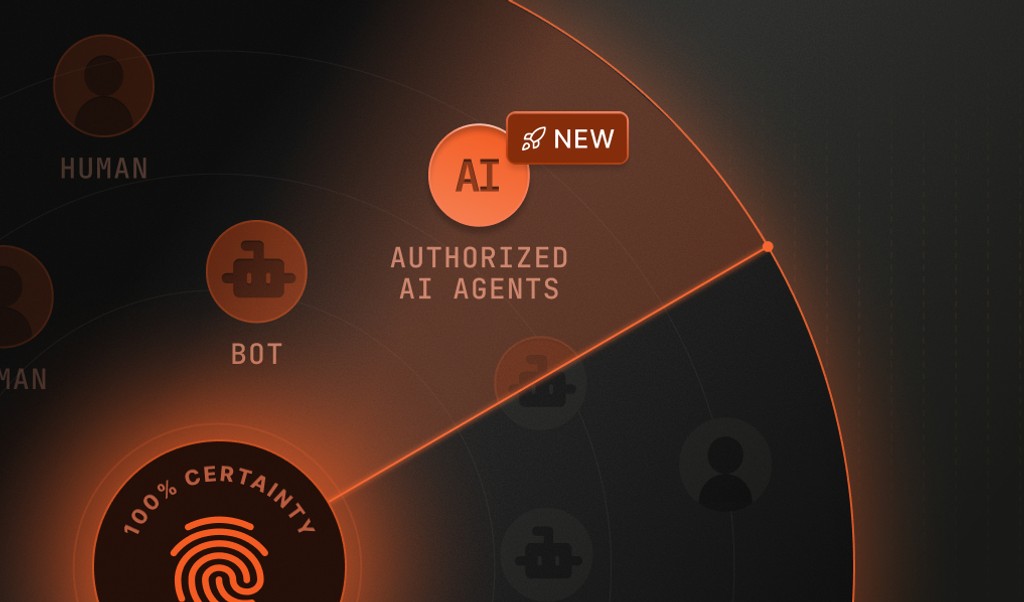
- AI Agent Detection tells you when an AI model is driving a real browser session on behalf of a user, verified with 100% certainty via cryptographic signing from providers such as OpenAI, AWS AgentCore, and Browserbase.
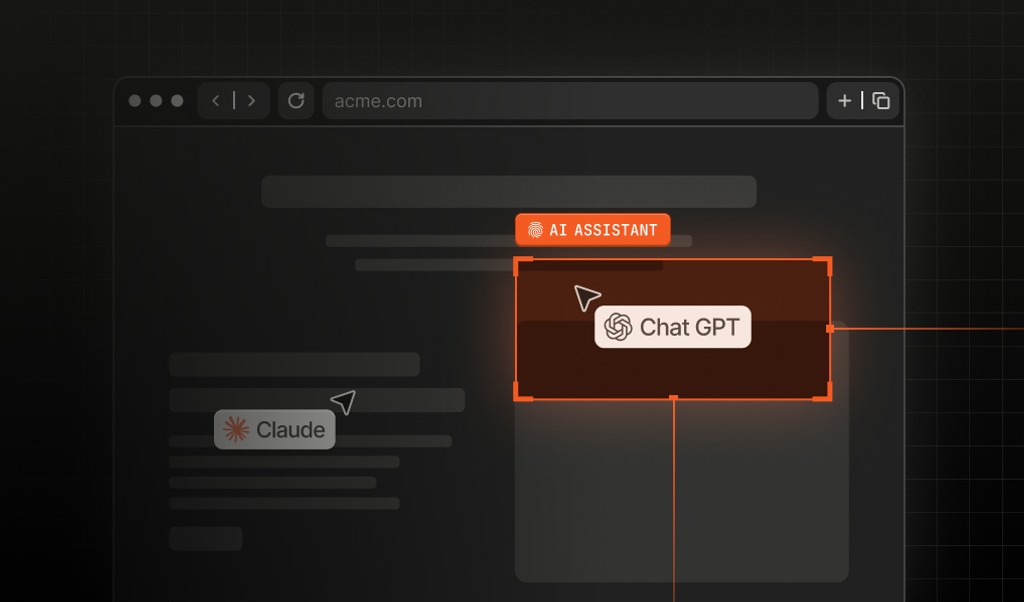
- AI Assistant Detection (now in beta) works at the HTTP layer, verifying whether requests from ChatGPT, Gemini, or Claude are legitimate or spoofed.
New Smart Signals: Rare Device Detection and iOS Simulator Detection
We added two brand-new Smart Signals that give you sharper risk context to make better decisions.
- Rare Device Detection evaluates device attribute combinations against Fingerprint's global traffic and tells you not just whether a device is rare, but how rare — including setups never-before-seen in our 14-day reference window.
- iOS Simulator Detection flags visits from simulated environments rather than real devices, giving you a reliable non-genuine device signal you can feed directly into your risk engine.
We also expanded developer tools detection to mobile, bringing a previously web-only signal to your native app coverage.
Suspect Score AI recommendations
Suspect Score now learns from your own labeled fraud data. Upload your data to the dashboard and get AI-recommended, optimized signal weightings tailored to your specific traffic mix, without manual tuning or guesswork. You keep full visibility into how scores are constructed and full control over whether to apply the recommendations.
Fingerprint MCP Server
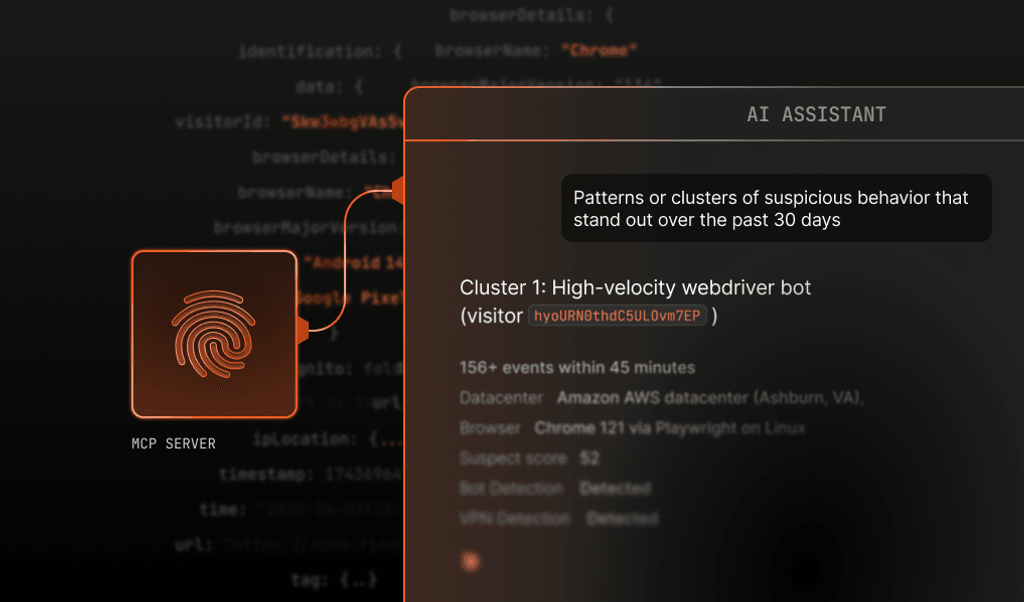
The Fingerprint MCP Server turns your device intelligence data into a layer that you can query directly. Fraud analysts can ask natural language questions — "Are these accounts related?" "Why did suspicious transactions spike on checkout?" — and get answers in seconds instead of hours of manual investigation. Developers can connect AI coding environments, such as Claude Code or Cursor, directly to Fingerprint to build and ship fraud-prevention features faster.
See it in action:
Have questions about any of these? Reach out to us for answers, demos, and early access where applicable