Summarize this article with
The Fingerprint MCP Server turns device intelligence into an AI-queryable data layer while also enabling AI-powered workspace management and integrations, allowing teams and automation to detect anomalies, investigate fraud across events, and manage their Fingerprint environment using natural language.
Fraud teams today are drowning in data. Every login attempt, checkout, session, and API call generates signals about the devices interacting with your systems. Fingerprint processes events from over a billion devices every month, helping organizations distinguish trusted users from bots, fraud rings, malicious actors — and increasingly, legitimate AI-driven automation.
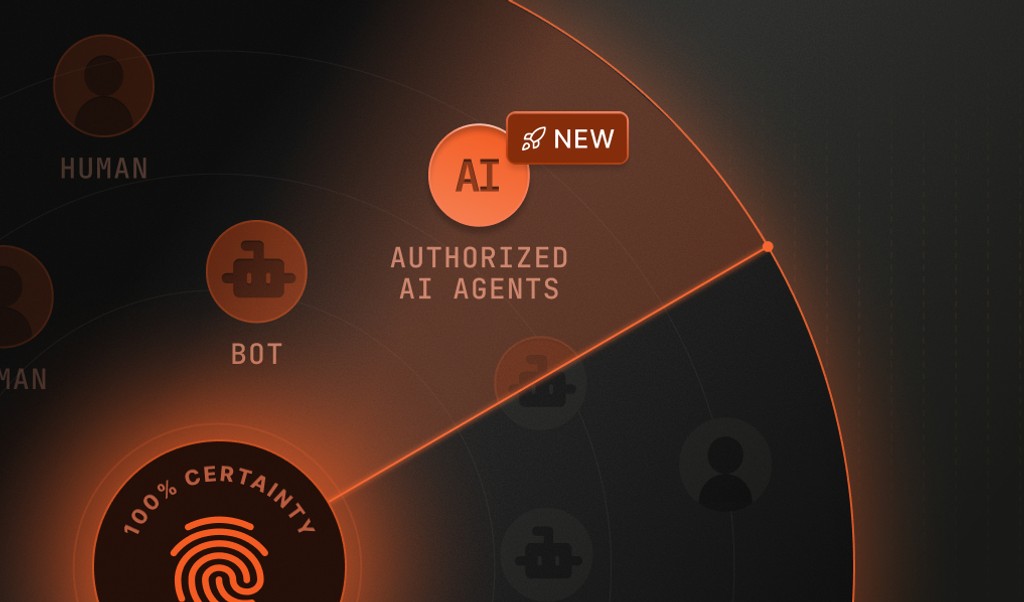
Bots are no longer always the enemy. As AI agents and automation become a normal part of modern applications, security teams must now distinguish between helpful automation, trusted users, and malicious activity.
At the same time, a new way of working with data is emerging. Instead of navigating dashboards or writing queries, teams are increasingly asking AI assistants to interpret data, identify patterns, and explain what’s happening. The challenge is that most AI assistants can’t directly access operational fraud data or security infrastructure.
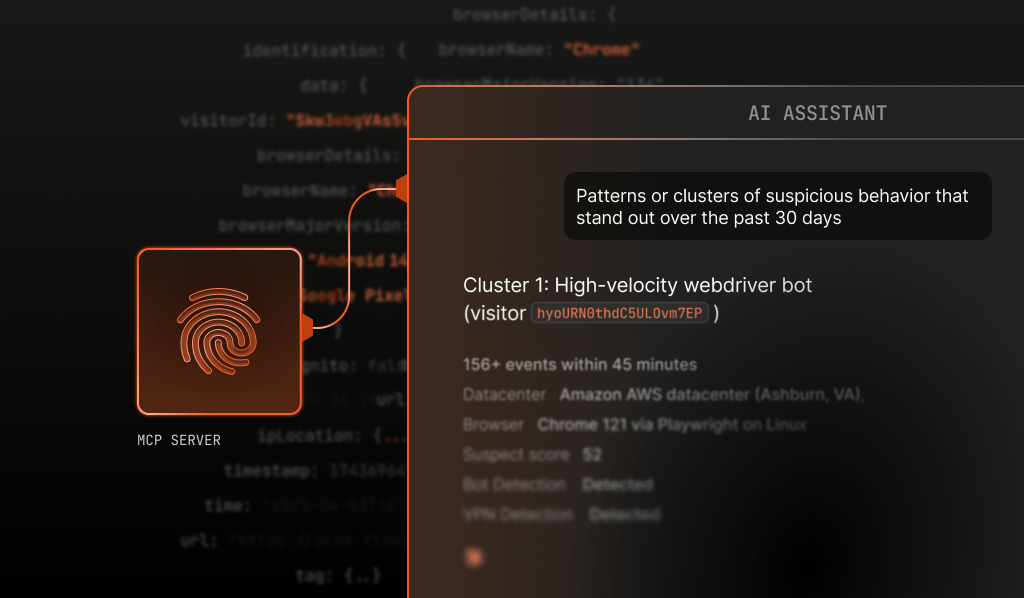
That’s where the Fingerprint MCP Server comes in. Built for developers, product teams, and fraud analysts, it allows AI assistants and agents to interact directly with Fingerprint — helping teams investigate suspicious activity, automate workflows, and build applications powered by device intelligence.
It works through the Model Context Protocol (MCP), an emerging standard for connecting AI systems to external tools and data. Through MCP, AI assistants can securely access Fingerprint signals, analyze fraud events, manage workspace configuration, and integrate device intelligence into applications — all through natural language.
We’re launching the Fingerprint MCP Server through an invitation-only preview, and we’ll be showcasing live demos at upcoming events including MRC Vegas (March 16–19) and MRC London (April 13–15).
What is an MCP Server?
The Model Context Protocol (MCP) is an emerging standard that allows AI assistants and agents to interact with external tools and data systems. Think of MCP as an API designed specifically for AI. Instead of building custom integrations for every AI platform, MCP provides a standardized way for AI assistants to access operational data and tools. An MCP server exposes capabilities that AI agents can query.
With the Fingerprint MCP Server, those capabilities include access to:
- Device intelligence signals and fraud events
- Real-time anomaly detection and investigation insights
- Workspace management capabilities, allowing AI to configure and manage Fingerprint environments
- Integrations with third-party tools and systems
The MCP Server can also connect with AI coding environments such as Claude Code and Cursor, allowing developers to design and build Fingerprint-enabled applications using best practices provided by Fingerprint.
This creates a unified interface where AI can analyze fraud signals, manage the Fingerprint workspace, and help build applications powered by device intelligence.
A new interface for fraud data
Fingerprint already processes enormous volumes of device intelligence data. Every month, our platform identifies over one billion unique devices, helping companies recognize risky behavior in real time. These signals power fraud prevention systems used by thousands of companies across industries including fintech, e-commerce, marketplaces, and online services.
Until now, when suspicious activity occurs, an analyst would typically need to search through logs, correlate device identifiers, analyze traffic patterns, and validate suspicious behavior. Investigating a spike in anomalous activity often requires pulling signals from multiple systems and manually connecting the dots.
The Fingerprint MCP Server changes that.
By exposing device intelligence through MCP, AI assistants can analyze fraud signals directly. Because the MCP Server connects directly to production APIs, AI agents can analyze large datasets with minimal delay.

For example, instead of manually analyzing traffic, a fraud analyst asks an AI assistant: “Why did suspicious transactions spike on checkout in the past five minutes?” Within seconds, the assistant analyzes device intelligence data and produces a detailed explanation of what changed.
Or a fraud team notices an increase in suspicious account creations, and asks the assistant: “Are these accounts related?” The assistant identifies a pattern and links the accounts through shared device characteristics connected to a fraud ring.
What once required hours of analysis now takes seconds.
This is the experience the Fingerprint MCP Server enables. It turns fraud investigation into a conversational workflow, where teams can ask questions and receive insights instantly.
Built for developers, product teams, and fraud analysts
For developers, integrating fraud intelligence into AI systems has traditionally required building complex pipelines and custom integrations. The Fingerprint MCP Server simplifies this. Once a Fingerprint license is in place, developers can connect any MCP-compatible AI assistant or agent directly to device intelligence.
With the Fingerprint MCP Server, developers can move beyond dashboards and build AI-native workflows directly on top of device intelligence.
Developers can now create:
- AI-powered fraud investigation tools
- Applications built with AI coding platforms like Claude Code or Cursor
- AI-driven Fingerprint workspace management
- Custom fraud detection and response tools powered by Fingerprint device intelligence
Because MCP is a protocol rather than a platform, teams are free to choose whichever AI assistants they prefer. By connecting AI coding environments directly to the MCP Server, developers can move from idea to implementation faster — with AI assisting not only with analysis but also with building and managing fraud-aware applications.
A faster workflow for fraud analysts
While developers enable the infrastructure, the biggest day-to-day impact may be felt by fraud analysts. Fraud investigations often require connecting signals across thousands or millions of events. Even experienced analysts must spend significant time navigating dashboards and correlating data.
The MCP Server introduces a new approach. Instead of manually exploring datasets, analysts can simply ask questions.
For example:
- “Show me devices related to this transaction.”
- “Are these login attempts connected?”
- “What patterns exist across these suspicious sessions?”
The AI assistant queries Fingerprint device intelligence through the MCP Server and returns insights immediately. This allows analysts to quickly identify suspicious behavior, validate hypotheses, and accelerate investigations.
Fraud analysts can also take it to the next level by automating this work. They can build AI-driven workflows on top of their device intelligence data that may, for example, automatically detect anomalies and flag incidents, and maybe even do some initial incident response.
The result is a dramatically shorter investigation cycle.
How the Fingerprint MCP Server works
The MCP Server is designed to be flexible and easy to deploy. We’re releasing it in two forms.
Open-source MCP Server
Organizations that prefer local infrastructure can deploy the open-source MCP Server, allowing engineers and analysts to run it locally on their laptops while connecting securely to Fingerprint APIs.
Managed MCP Server
For teams that want a simpler experience, Fingerprint will provide a managed MCP service.
Both deployment models work in the same way. An AI assistant connects to the MCP Server using the MCP protocol. The MCP Server communicates with Fingerprint’s production APIs. Device intelligence data is retrieved and analyzed in real time. The AI assistant interprets the results and returns insights.
This architecture allows AI assistants to analyze fraud events quickly and efficiently.
Why we built the MCP Server
Artificial intelligence is transforming how people interact with data. Tasks that once required technical expertise can now be performed through natural language interactions with AI assistants. This shift opens new possibilities for fraud prevention.
AI systems are particularly effective at identifying patterns across large datasets — exactly the kind of problem fraud detection involves. But for AI to be useful, it must have access to the right signals. Fingerprint has spent years building one of the most comprehensive device intelligence platforms in the industry. The MCP Server connects that expertise directly to modern AI systems.
In many ways, it represents the missing link in the anti-fraud AI chain. Fraud platforms generate rich signals about user behavior, but AI assistants have historically been isolated from them. The MCP Server bridges that gap.
The device intelligence industry's first MCP Server
MCP servers are quickly emerging as a key piece of infrastructure for AI-driven systems. Organizations across industries are beginning to explore how MCP can connect AI assistants to operational data and empower more automation across their workflows.
By launching the Fingerprint MCP Server now, we position ourselves at the forefront of this shift. While many companies are still experimenting with AI integrations, we’re building the infrastructure that allows AI to analyze risk signals in real time, identify patterns faster, and empower easier investigative work for fraud teams.
Early access is now open
The Fingerprint MCP Server is currently available through an invitation-only preview program. During this phase, we’ll work closely with early adopters to refine the experience and explore new use cases for AI-driven fraud analysis. We’ll also be demoing the Fingerprint MCP Server live at our booth during MRC Vegas (March 16–19) and MRC London (April 13–15). Attendees will be able to see firsthand how AI assistants can interact with device intelligence to investigate fraud patterns in real time.
If you’re interested in early access, we encourage you to speak with your customer success manager or reach out to our sales team.
The future of fraud investigation
AI assistants are rapidly becoming a new interface for data. Instead of navigating dashboards and writing queries, teams can ask questions and receive insights instantly. The Fingerprint MCP Server brings this new way of working to fraud detection.
By turning device intelligence into an AI-queryable data layer, we enable teams to investigate anomalies, uncover patterns, and analyze events instantly. And this is just the beginning. As AI agents continue to evolve, the ability to securely connect them to operational data systems will become increasingly important. The Fingerprint MCP Server lays the foundation for that future.
Want to see it in action? Watch the demo to see how the Fingerprint MCP Server turns a simple text prompt into real-time fraud insights.