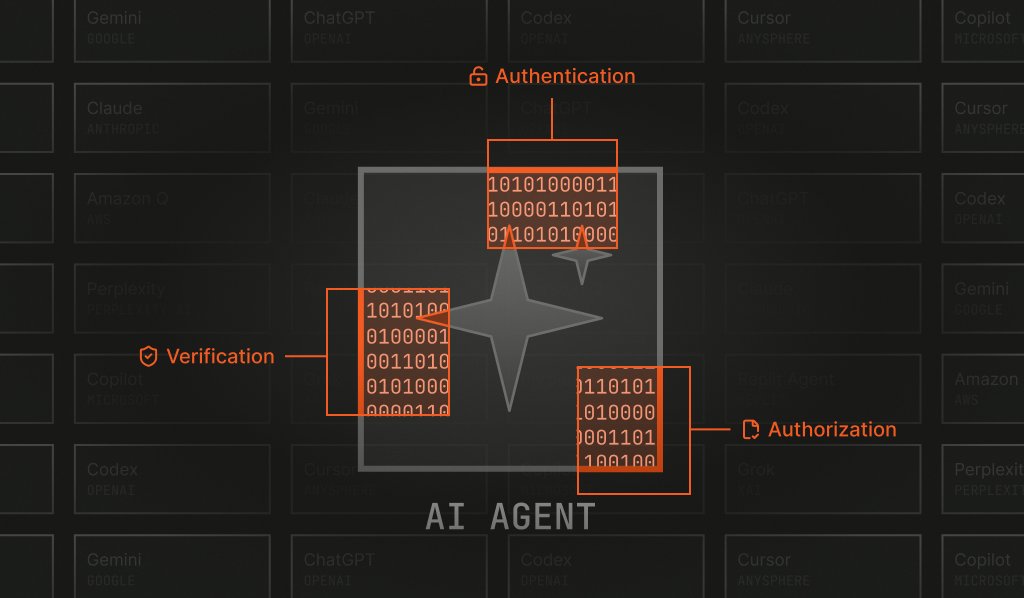
AI agents now click buttons, fill forms, call APIs, and complete purchases on behalf of people.
As they do, engineering and fraud teams keep reaching for three words to talk about agent trust: authenticated, verified, and authorized.
In conversation, these words may get used interchangeably. In a system design review, that imprecision causes real bugs: How do you handle an agent that's authenticated but shouldn't be authorized to do a certain task? Or what do you do with an agent a user has authorized without verifying who operates it?
This post pins down what each of these terms means, how they relate in an agentic workflow, and how to answer a key question that sits underneath the definitions: Is this traffic even coming from the agent and device it claims to be?
Authenticated vs verified vs authorized, defined
These words describe three different questions you answer at three different moments.
- Authentication answers who holds this credential? It establishes that the requester controls a valid credential. A user logging in with a password and a second factor is authenticating. An AI agent presenting a valid token or signed request is authenticating, though that authentication alone doesn’t prove it is actually a “ChatGPT Agent operated by OpenAI.”
- Verification answers is this claim true? It's the act of independently confirming an attribute or assertion against a trusted source, such as checking that an agent really comes from the operator it claims to be, or that its identity hasn’t been spoofed.
- Authorization answers what are you allowed to do? For agents, it starts with what the user has authorized: whether they granted the agent the right to act for them, and for what scope and duration. Your own policy then sets limits on top of that grant.
The cleanest way to remember the relationship: Authentication tells you a credential is valid, verification tells you the claim behind it is true, and authorization decides what the agent is allowed to do once you trust it.
For example, an authenticated agent might be authorized to read a user's calendar but not authorized to move money.
How the three fit together in an agentic workflow
Picture an AI agent that a user has asked to book travel and pay for it. You are working at a travel-booking platform, and a well-designed purchase flow runs through all three concepts in order:
- Authentication. The agent presents a credential when it reaches your endpoint. This might be a cryptographic signature on its HTTP requests, an API key tied to a registered vendor, or a token issued through a delegation flow. Your system checks (authenticates) that the credential is valid.
- Verification. Your system confirms (verifies) the claim behind the credential is true: The key belongs to the operator it says it does, and the agent isn’t an impersonator.
- Authorization. With an authenticated and verified agent identity in hand, you can check what the user has actually authorized: this agent, acting on behalf of this user, may search and book, up to a spending limit. Your own policy then applies on top, such as requiring a step-up or human confirmation for a payment above a threshold.
Skip verification and you know the credential is valid but not the provider who stands behind it. Skip authorization and a legitimately authenticated agent can act without the user ever granting it, or do more than anyone intended. The order matters, and so does keeping the concepts distinct when you write the policy that enforces them.
Standards are forming around agent identity
The industry is converging on standards for authenticating, verifying, and authorizing AI agents.
One example is Web Bot Auth, an authentication method that uses cryptographic signatures in HTTP messages to prove a request comes from the AI agent that controls a given key. It relies on two active IETF drafts: a directory draft that lets an agent publish its public keys, and a protocol draft that defines how those keys attach the agent's identity to HTTP requests.
In practice, the agent generates an Ed25519 private key, signs each request, hosts its public key at a well-known directory URL, and adds Signature, Signature-Input, and Signature-Agent headers to every request. The receiving system retrieves the public key and validates the signature, which authenticates the request.
Verification is a separate step: deciding whether to trust the operator behind that key directory.
Authorization is also getting its own standards. Several IETF drafts propose OAuth-based profiles for delegated agent authorization, where a user consents and the agent receives scoped, sender-constrained tokens that can only narrow as authority is passed along.
In commerce, Google’s Agent Payments Protocol (AP2) uses signed mandates that let an agent prove to a merchant that a user approved a specific purchase. Visa’s Trusted Agent Protocol builds on the Web Bot Auth pattern and also carries proof of the user’s authorization, and Mastercard’s Verifiable Intent ties agent identity to the constraints a user sets.
These protocols help to define what permissions the user has actually granted (authorized).
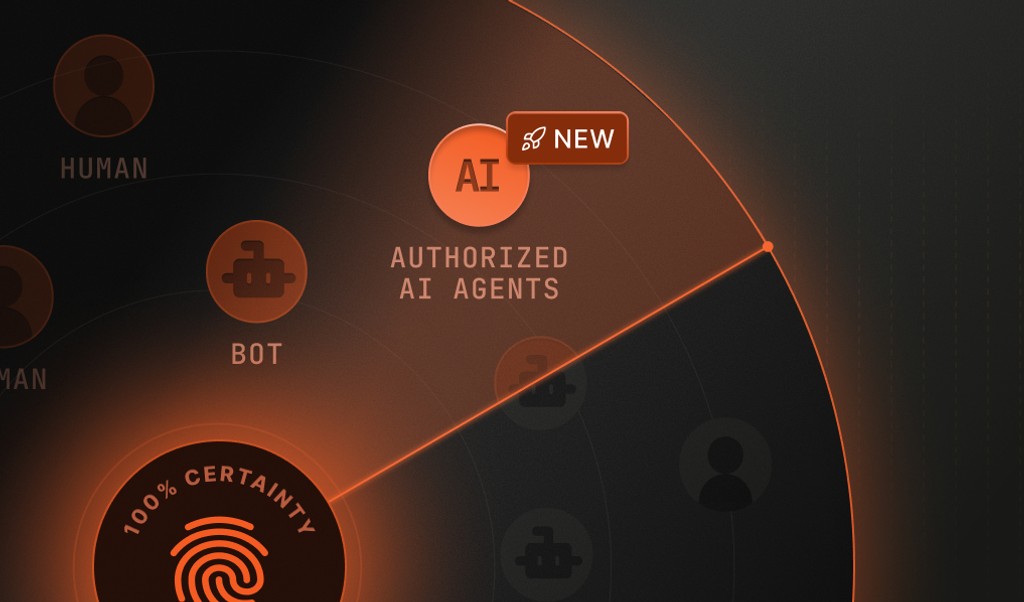
A fourth question hides under all three words: Is this even an agent?
Authentication, verification, and authorization frameworks all assume you already know you're talking to an AI agent and can tell one agent from another. But a large share of automated traffic never presents a verifiable identity at all. Generic automation tools like Selenium, Playwright, and headless Chrome won't show up in any agent directory, and some traffic actively spoofs an identity it doesn't own.
That's a device- and traffic-level question, and it's distinct from the three terms above. Before any of those three checks mean anything, you need visibility into whether the request is coming from a real, consistent client — and whether it's automated in the first place.
Where device intelligence complements your auth stack
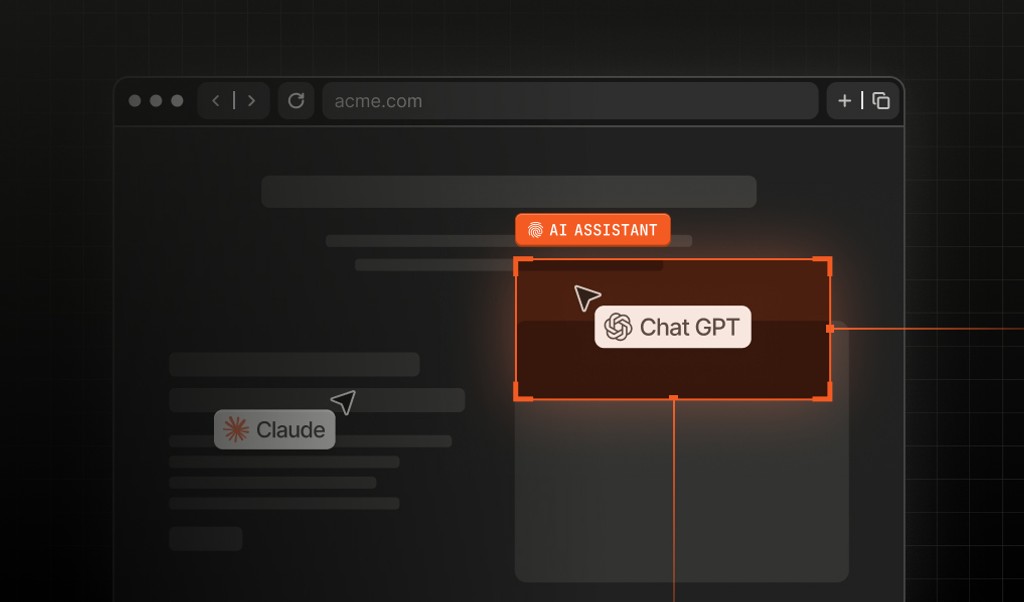
This is where Fingerprint AI agent detection fits alongside — not instead of — your authentication and authorization logic. It identifies legitimate AI agents visiting your site and distinguishes them from malicious bots, and it uses the same Web Bot Auth protocol described above to authenticate agents cryptographically.
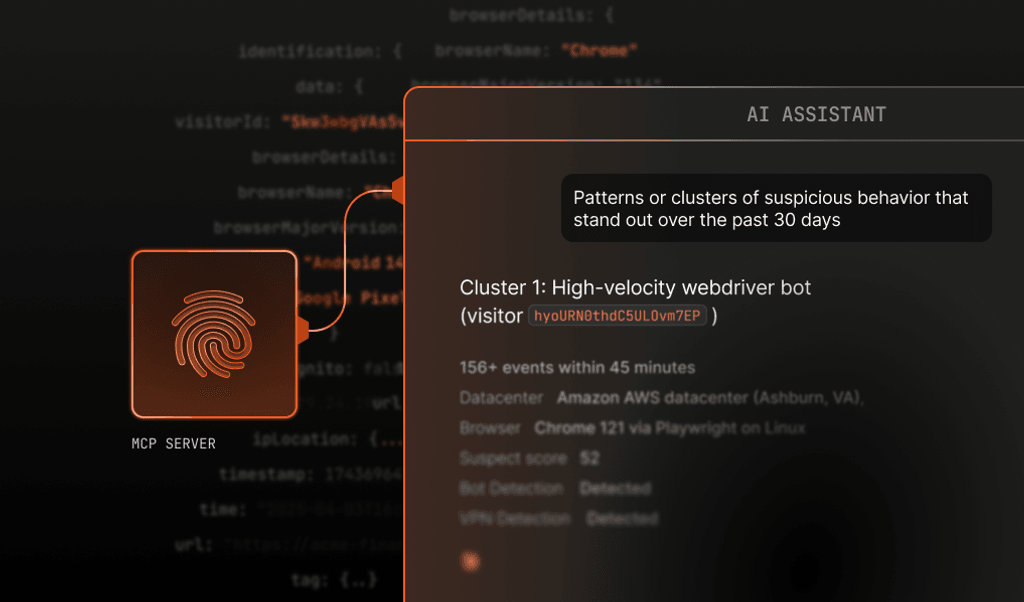
When Fingerprint detects an agent, the Server API returns structured metadata in a bot_info object:
- category — for example
ai_agent,ai_browser, orbrowser_automation. - provider — the organization operating the agent, such as OpenAI or AWS.
- name — a human-readable name like ChatGPT Agent.
- identity — the outcome of checking the agent’s claimed identity.
The identity value maps directly to the authentication and verification concept discussed earlier. It can be:
- signed — the signature verified against the agent's public key directory.
- verified — the signature verified and the agent is operated exclusively by its vendor.
- unknown — the agent is recognized, but no verifiable identity was presented.
- spoofed — the agent presented an identity that failed verification.
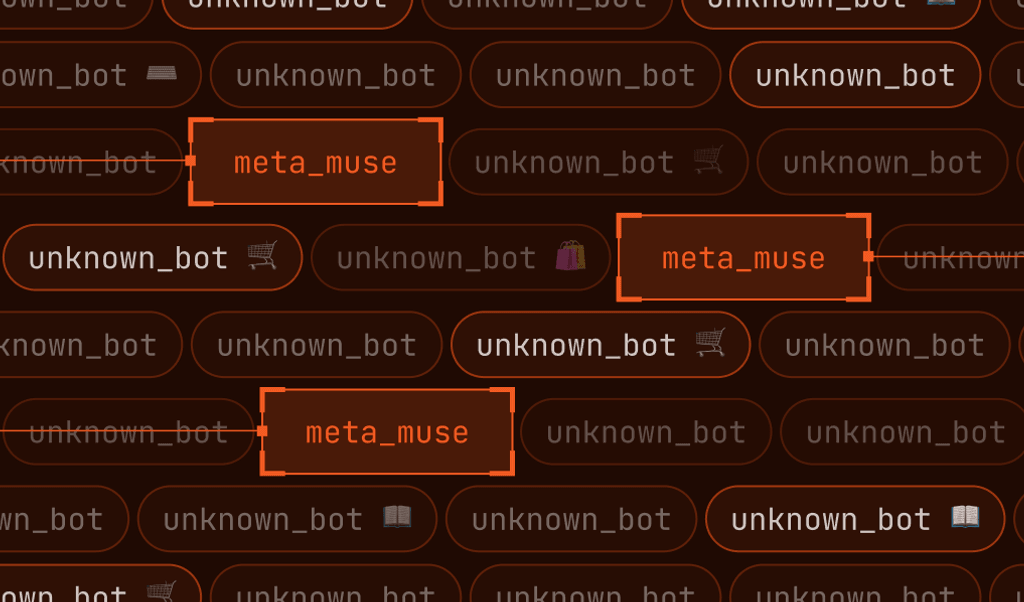
Those outcomes give you something concrete to base your access decisions on. For example, you could allow a verified or signed identity, apply custom logic to unknown traffic, and review spoofed results, which may indicate misconfiguration or malicious spoofing. Supported agents today include ChatGPT Agent (OpenAI), Bedrock AgentCore (AWS), Browserbase Agent, Manus Agent, AGI Agent, Anchor Browser, Meta’s Muse, and more.
>> See every agent Fingerprint can detect in our Bot Directory.
Tying an agent to a consistent device
Authenticating and verifying an agent tells you who is behind a request and this is where Fingerprint can help. Fingerprint Bot Detection identifies bots, AI agents, and AI assistants with one JavaScript agent and simple APIs that can return bot detection results without additional latency.
You can decide how to treat AI traffic at each touchpoint — entry pages, login pages, checkout, account updates — rather than applying one blunt rule everywhere.
Alongside agent detection, Fingerprint's Smart Signals surface 100+ attributes — including residential proxy use, antidetect browsers, and browser tampering — to help spot risky traffic before it becomes fraud.
The takeaway
Keep the three terms distinct in your designs. Authenticate a credential. Verify the claim behind it. And authorize what the user has granted, in that order.
Before any of those checks mean much, you need to know whether the request is coming from an AI agent at all. Fingerprint’s agent detection helps with the authentication and verification steps, so your authorization decisions rest on an identity you can trust. See what it returns for agents in the AI agent detection docs or create a free account.